The Christmas lights switch-on is the night Mesa's town centre stops being a thoroughfare and becomes a gathering: school choirs, a brass band, woolly hats and a few thousand people counting down together. It is free to attend, which is exactly why it gets crowded.
The difference between a lovely evening and a frazzled one usually comes down to two decisions — when you arrive and where you stand. Get those right and the rest of the night looks after itself.
How the evening usually runs
Timings shift a little each year, so treat the following as the shape of the night rather than a minute-by-minute promise. The official programme and the organisers' updates are the places to confirm on the day.
- Early afternoon: stalls open and the road closures come into force. The market square starts filling with craft tents, food vans and a stage.
- Late afternoon: school choirs and local groups perform. This is the easiest part of the evening to move around in, and the best time to buy food before the queues form.
- Early evening: the main stage programme builds towards the countdown, usually led by whoever is hosting that year, with a short speech and a visible clock or count.
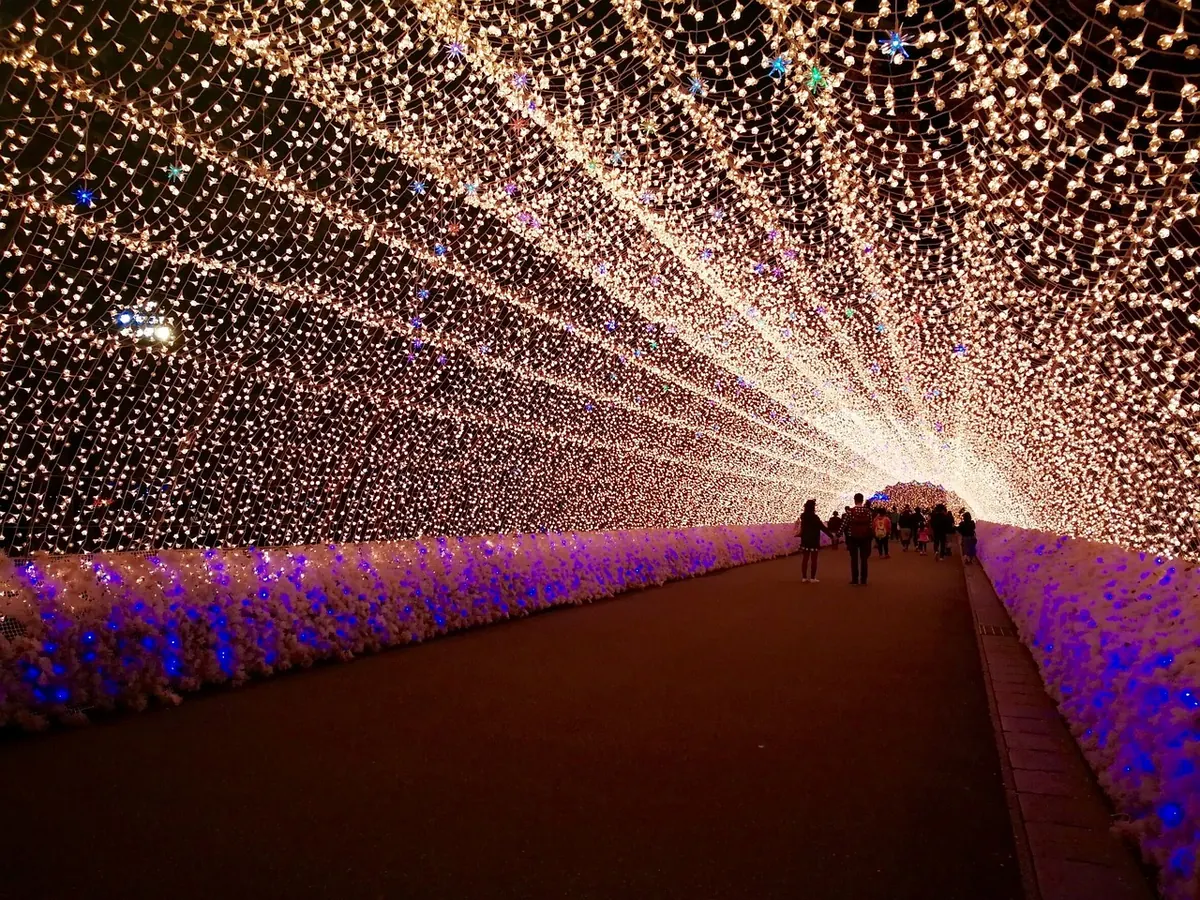
- Straight after the switch: the lights come on across the whole high street at once, not just the tree. Expect a surge of people moving towards the square for photographs.
- Later: the crowd thins noticeably within about half an hour. If you want a photo of the tree without strangers in it, wait — the square empties quickly.
Road closures and how to get in
The streets around the market square close in the early afternoon so that staging and stalls can be set up safely. Expect no vehicle access through the core of the town centre from mid-afternoon until roughly 9pm, with the outer roads reopening first as people head home.
Two things catch people out. The first is parking on a street that is about to close. Cars left inside a closure area can be moved or ticketed, which is a miserable way to end a nice evening. Read the signs on both sides of the road, not just the one next to your car. The second is assuming the side streets just outside the closure will be quiet — they fill up by mid-afternoon with people who had the same idea.
If you are driving
The reliable approach is park-and-stride: leave the car a ten-minute walk out and cover the last bit on foot. Supermarket and retail car parks on the edge of town are the obvious choice, but check the time limit before you walk away, because several of them enforce two hours and the switch-on evening runs longer than that.
If you are not driving
Buses are diverted around the closure, and stops inside the town centre often move to the nearest open road for the evening. Check the diversion before you set out, and if you are being picked up afterwards, agree a meeting point two or three streets back from the square. Trying to find each other in the crowd outside the stage rarely works.
Where to stand: the best family spots
- At the barriers by the stage: the closest view of the tree and the countdown. You will need to be there 45 to 60 minutes early, and you will be standing the whole time.
- A little further back, near the shopfronts: still a clear sightline for taller adults and for children on shoulders, and far easier to leave when it finishes.
- The raised pavement by the library steps: a few steps up give shorter viewers a better angle over the crowd. Watch your footing, as stone steps get slippery in the cold and damp.
- Side streets off the square: quieter, with more room for pushchairs, though the tree will be partly obscured. Good for very small children and anyone who finds dense crowds uncomfortable.
- The far end of the high street: the least crowded option. The lights come on along the whole street at once, so you still see the moment — just from a distance.
One tip from anyone who has done this a few times: choose your spot before the final song, not after. Once the countdown starts, the crowd stops being fluid and becomes a wall. If you need to move — a toilet trip, a lost glove, a tired toddler — do it during the performances, not in the ten minutes before the switch.
Accessible viewing and facilities
There is usually a designated level-access viewing area near the main stage, with a clear route in and out and space for wheelchairs and mobility scooters. Ask a steward to point you towards it rather than guessing from the crowd; stewards are briefed on the layout and can tell you which side is easiest to leave from.
Accessible toilets are normally provided alongside the standard temporary ones, and where a changing places facility or a quiet space is available it will be listed in the programme. Arrive early regardless: accessible viewing areas are typically smaller than the demand on the night, and they fill at the same rate as everything else.
If someone in your group needs a specific adjustment — a step-free route, a hearing loop, somewhere calm to sit for ten minutes — contact the organisers in the week beforehand rather than at five to six on the night. Events can generally plan for a request made in advance and rarely can for one made on the spot.
Worth knowing too: sound levels drop off quickly. If loud music or flashing lights are difficult for anyone in your party, the streets a block or two back from the stage give you most of the atmosphere with none of the intensity.
What to bring, and what to leave behind
Dress for standing still rather than walking. It is the cold feet and the cold hands that end family evenings early, not the temperature itself. Thermal socks, a hat that covers the ears and gloves for everyone, including the adults who think they will be fine.
A flask of something hot saves you twenty minutes in a queue, and a small torch is genuinely useful for finding your way back to the car. Charge your phone before you leave, because you will take more photographs than you expect and you may need it to find people afterwards. A blanket over a pushchair does more for a small child's mood than any amount of coaxing.
Leave glass bottles, sparklers and anything that flies at home. If you are planning to bring a dog, check the event's rules first — crowded evenings with loud music are not much fun for most animals, and many switch-on events ask you to leave them behind.
The short version
Arrive an hour early and stand back from the barriers if you have small children or a pushchair. Park a ten-minute walk out of the town centre and walk in. Use the performances to move about and the countdown to stand still. Then stay for twenty minutes after the lights come on, when the square empties and the photographs are worth taking. If you need step-free access or a quieter spot, ask a steward on arrival and ring the organisers beforehand — that one phone call or email is the single thing most likely to change how the evening goes.
Photo: Plamankung / Pixabay